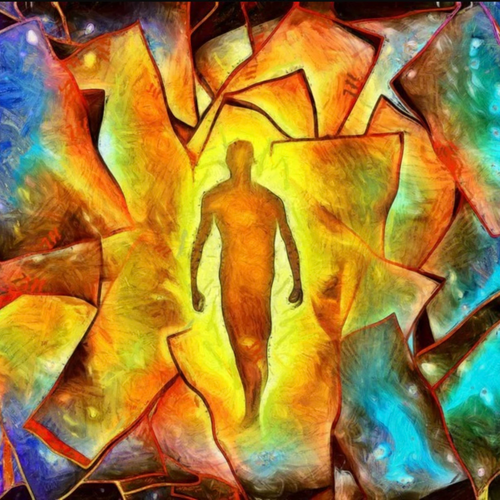
You Survived the Thing. Your Body Hasn't Gotten the Memo.
You did the hard part. You lived through it.
Maybe it was sudden. An accident, a loss, a phone call that split your life into before and after. Or maybe it built slowly, years of something you couldn't name wearing you thin, like holding your breath for a decade.
Either way, you're still here. And you've done the work. Therapy, counseling, journaling, prayer. You've talked about it, processed it, understood it. Your mind knows the story. Your mind has moved on.
So why does your body still flinch?
Why does a certain sound, a particular smell, a shift of light in a room still send that jolt through your chest? Why do you still carry the tension in your shoulders, your jaw, your knees? Why does sleep feel like a negotiation instead of a surrender?
Your mind and your body process shock on completely different timelines.
Your mind can forgive in a moment. Your body keeps the receipt.
"I did not realize how much shock and grief I was storing. When nothing else was helping after my dog died this helped me move through some very stuck emotions."
- Shiloh
The Layer Underneath the Layers
The body keeps its own record. Even a brief thought of what happened can bring the shoulders up toward the ears. The jaw sets. The breath catches somewhere in the chest instead of going all the way down.
That reaction, a whole-body response to nothing more than a thought, is what I call Stored Shock.
Your mind processed the memory. Your body just relived the event. That gap between what your mind knows and what your body still does is the gap that most approaches to trauma recovery have never addressed.
Stored Shock is what happens when your nervous system responds to an overwhelming experience by locking down. It's protective. Your body does it to survive. The problem is that your body doesn't always know when the emergency is over. So it keeps holding. Muscles stay tight. Sleep fractures. Emotions go flat or swing without warning. You feel "off" in a way that's hard to explain to anyone who hasn't lived it.
You can understand your trauma completely and still have your body holding it.
That's not failure. That's not a sign you haven't done enough work. That's just how bodies operate. The mind processes through language and meaning. The body processes through release.
The longer Stored Shock runs unchecked, the more the body stops distinguishing between alarm and normal. The emergency becomes the baseline. The alarm stops feeling like an alarm and starts feeling like just the way things are.
"I found myself feeling quite relaxed, as though I had just come out of a soothing massage session. I even found myself able to cope with memories of traumatic events that I had shelved in the back of my mind. They just seemed to come up to the surface gently, and I kept finding grace to deal with them, without fear."
- Saul
He used the word "shelved." Not buried, not repressed. Shelved. Like the memories were filed away in a place that was organized, accessible, and waiting. The essence didn't drag them out. It made it possible to meet them when they surfaced. That's the whole quality of working at the body level rather than the thinking level.
What If There Was a Way to Support Your Body's Timeline?
Not to rush it. Not to force anything open. Not to fix you.
But to gently support the process your body already wants to complete.
That's what Aftershock was formulated to do.
Aftershock is a blend of seven flower essences, each one chosen because it supports a specific piece of the Stored Shock pattern. Together, they work as a system: helping your body release what it's been holding, at whatever pace feels safe to your nervous system.
Flower essences work at the vibrational level, which sounds abstract until you consider that your nervous system responds to subtle signals constantly. The felt difference in a room where something terrible happened. The calm of a person sitting with you in a crisis. Flower essences offer your body something in that same register: a frequency of release, of standing down, of being safe. Your body responds when it's ready, in whatever way it needs to.
Aftershock does not replace therapy. Many of the people who use Aftershock are actively working with therapists and counselors. It works alongside that process, addressing the body-held piece that talk therapy often can't reach on its own.
"This doesn't replace therapy and inner healing, but helped me be functional when specific emotional triggers were activated and my body was overwhelmed."
- Lizzy
"I have also recently started therapy for CPTSD, and have been using several things to aid my healing journey. I didn't notice anything intense, but did notice a reduction in intrusive thoughts."
- Michele
Individual results may vary. These statements reflect personal experiences and are not intended as medical claims.
What's Curious About This Blend
Before I walk you through the ingredients, here are a few things people have noticed that surprised them:
- Why do some people report sleeping better within the first week, even though this isn't a sleep formula?
- One person noticed their immune and digestive systems improved. What would that have to do with old trauma?
- Several people describe memories surfacing "gently" instead of the usual flooding. What makes that possible?
- How did a trauma essence end up helping a nurse who works in a trauma unit stay grounded during shifts?
- Why would someone who "didn't think they had trauma" from a car accident still feel shaken by crash sounds on TV, and what changed after using this?
The answers are in the reviews below, and in the ingredients themselves.
The Seven Essences Inside (And What They're Actually Doing)
Each of these essences addresses a specific layer of Stored Shock. I chose them as a team, not a random assortment, because trauma doesn't live in one place. It weaves through your emotions, your body, your sense of identity, and your ability to imagine a future. This blend works across every dimension of Stored Shock.
Arnica
The story: Arnica has been used for centuries in herbal medicine for physical trauma. As a flower essence, it addresses the emotional and energetic imprint that violence, accidents, and shock leave behind, particularly in the body.
That means: If you've ever felt like your body "remembers" something your mind has already processed, Arnica supports releasing that stored physical tension. It's for the flinch that happens before you can think.
"I have been dealing with body aches due to not accepting the death of my ex husband. Aftershock is the only thing helping me with the body aches. It's getting to where I'm not hurting all the time."
- Tiffany
When I read Tiffany's message, what strikes me is the phrase "body aches due to not accepting." She already understood the connection between her grief and her pain. Her mind knew. But knowing hadn't stopped the hurting. That's exactly the gap Arnica is for. The mind can comprehend the loss. The body is still holding the impact of it.
Star of Bethlehem
The story: Star of Bethlehem is one of the original Bach flower remedies, specifically included in the Rescue Remedy formula for its ability to soothe the nervous system after shock. It's the classic "crisis aftermath" essence.
That means: That buzzing, wired feeling after something terrible happens? The one where you can't quite settle back into your own skin? Star of Bethlehem is for that exact sensation. It supports your nervous system in standing down from red alert.
Fireweed
The story: Fireweed is literally the first plant to grow back after a forest fire. It pushes through scorched earth. As a flower essence, it carries that same energy of renewal and resilience after devastation.
That means: When you're ready to rebuild but don't know where to start, Fireweed supports the "what now?" phase. The part where survival shifts into living again. It's the essence of coming back, not as you were, but as someone forged by what you've been through.
"It feels like 'Yarrow Shield for Your Past' while also healing those aspects of your younger self and at the same time building a bridge between the person you were, the person you are, and the person you are becoming."
- Amrish
What strikes me about Amrish's description is that he's not talking about going back. He's talking about a bridge that runs in three directions at once. That's what Fireweed does at an energetic level: it doesn't ask you to pretend the fire didn't happen. It supports the growth that's only possible because it did.
Comfrey
The story: Comfrey's folk name is "knit-bone" because of its traditional use in supporting deep physical repair. As a flower essence, it works at the root level of old wounds, the ones that never fully closed.
That means: If you have trauma from years or decades ago that still surfaces, Comfrey supports repair at that deep, foundational level. Not a quick fix. A slow, thorough mending of what's been torn.
Echinacea
The story: Echinacea has a long history as an immune support herb. As a flower essence, it addresses something equally fundamental: identity. When trauma shatters your sense of who you are, Echinacea supports the rebuilding.
That means: If you've ever said "I don't even know who I am anymore" after something devastating, Echinacea is in this blend for you. It supports the transition from "person defined by what happened" to "person moving forward as themselves."
"I feel more able to release old patterns of thinking that in turn affected me emotionally. As I release the old I'm able to embrace the new and better ways of thinking and feeling."
- Maggie
What I notice in Maggie's words is the sequence: releasing comes first, then embracing. She's not describing adding something on top of old patterns. She's describing making room. That's the identity work Echinacea is for. You can't build the new self while still fully inhabited by the old story.
Moonbeam Coreopsis
The story: Moonbeam Coreopsis supports recuperation on every level: emotional, physical, and spiritual. It's a gentle, restorative essence for someone who has been through too much for too long.
That means: If you're simply exhausted from carrying this, Moonbeam Coreopsis is here for the tiredness. The kind of tired that sleep doesn't fix because your whole system needs permission to rest and recover.
Self-Heal
The story: Self-Heal (the flower) does exactly what the name suggests. As an essence, it supports your motivation and personal responsibility for your own healing journey.
That means: Self-Heal is not a crutch. It supports the part of you that knows what you need, even when that voice has gone unheard for a while. It encourages you to trust your own instincts about your next step.
"I believe this essence gave me the courage to seek additional help to remove this trauma from my body. This was exactly what I needed. It was a subtle push. Not overwhelming. Allowed me to look at this situation in a different perspective."
- Kelly
She'd been living with severe knee pain for three and a half years. The kind of pain that makes you give up on expecting better. She didn't describe a dramatic shift. She described a subtle push toward seeking help she hadn't been willing to seek before. That's Self-Heal doing exactly what it does. Not healing for you. Moving you toward the next step you already knew you needed.
Who This Is For (And Who It's Not For)
Aftershock was formulated for people living in the aftermath of deeply disturbing events. That includes:
- Survivors of abuse, violence, or sexual trauma
- People carrying grief that has become stuck or overwhelming
- Veterans and first responders processing cumulative exposure
- Anyone dealing with PTSD or CPTSD, whether recently diagnosed or long-recognized
- People who've done significant inner work but still feel something unresolved in their body
- Practitioners supporting clients through trauma recovery
It also works for moments you might not think of as trauma. A difficult breakup. A car accident you walked away from physically fine. A job loss that shook your identity. A medical diagnosis. Cumulative stress that compounded until something cracked.
"I recently have been dealing with a lot of cumulative stress from my job and other life events. After taking the Aftershock for a week or so I could tell that while it wasn't all fixed, it also wasn't weighing me down anymore, and that made a huge difference for me, because I work as a nurse in Trauma."
- Michael
If you're looking for something instant or dramatic, this probably isn't your match. The people who connect most deeply with Aftershock tend to describe the shift as "subtle," "gentle," and "gradual." It can go unnoticed until the thing that used to knock you sideways just doesn't.
"I cannot say that there was an immediate change, but what I have noticed over time, is an ease at handling stress. I have felt the ability to move away from old patterns of thought, and shake them off like an old coat. This has been a subtle change, and not until reflection did I discover the change."
- Tammy
Individual results may vary.
Expectations
Not everyone has the same experience. Here's what I want you to know:
Some people feel a shift within days. Others notice it gradually over weeks. Some people describe old emotions surfacing gently before releasing. And some people, like Stephanie, don't find that this particular blend is their match:
"I don't have full on trauma, just a constant unrelenting sadness. I have read other reviews on Aftershock, and several users have mentioned it bringing up difficult emotions. Honestly I am not sensing any relief and it just so discouraging not to be able to write a more positive review. Maybe it's not the correct essence for my situation."
- Stephanie (4 stars)
That's an honest experience, and I respect it. Flower essences are personal. What works for one person may not be the right match for another. Stephanie's instinct to keep exploring until she finds her match? That's the right instinct.
What Changes Look Like
The changes people describe with Aftershock tend to be subtle ones. Not fireworks. Not a switch flipping. More like noticing one day that you slept through the night. Or that a memory surfaced and you could sit with it instead of running. Or that the heaviness in your chest is lighter than it was last month.
"It has targeted the accumulated suffering I have experienced and has helped me to let go and live with more presence in my mind. Also it's helping me to regain mental and physical balance."
- Charles
"I was able to grieve, yet still commit to my well being and leave room for joy. Honestly this was so helpful, I recommended it to three friends who were also facing some pretty intense grief."
- Natalie
"Aftershock has really helped me navigate difficult and stressful times. It has helped me stay present and not numb out and I'm able to think more clearly."
- Lindsay
Works Alongside Your Existing Support
Aftershock isn't a replacement for therapy, counseling, or medical treatment. If you're working with a therapist, keep working with them. If you're on medication, please continue following your doctor's guidance.
What Aftershock offers is support for a dimension those approaches sometimes don't reach: the body-held, below-conscious residue of shock that persists even when your mind has done its processing.
Many people use it alongside other modalities. Therapy and flower essences. EMDR and Aftershock. They're not in competition. They address different dimensions of recovery.
"I purchased it for a client who is working with me to overcome a broken soul. She reports that the drops are helping her immensely."
- Dana
"I have purchased many bottles of this for clients and family and everyone has experienced immediate relief as well as progressive understanding of wounds and triggers that had once been concealed."
- Bridgette
One more distinction worth knowing:
"I have found this to be very helpful. I figured out that Crisis Care helps when you're in the midst of a crisis or in trauma. Aftershock is for afterwards and it helps with the root cause of why that thing you experienced was so triggering."
- Adina
Adina put it exactly right. Crisis Care is for during. Aftershock is for the aftermath. If you're in the middle of something acute right now, start with Crisis Care. If you're living in the long wake of something that already happened, Aftershock was made for where you are.
Why These Seven Together
I formulated Aftershock because I kept hearing the same thing from people. "I've done the therapy. I've done the work. But something in my body still holds it."
(If that's not your experience exactly, no pressure. But for a lot of people, it is the experience exactly.)
They weren't failing at healing. Their healing just had a layer nobody was addressing. And that layer responds to something different than talk, different than insight, different than understanding what happened and why.
Stored Shock is a pattern with multiple dimensions: the muscles that stay locked, the emotional shutdown, the identity fracture, the spiritual exhaustion, the loss of agency. One essence can't address all of that. But seven essences, each chosen for a specific dimension? That's a system.
Arnica for the body-held piece. Star of Bethlehem for the nervous system that never stood down. Fireweed for the will to rebuild. Comfrey for old wounds still pulling at the roots. Echinacea for the shattered sense of self. Moonbeam Coreopsis for the whole-system exhaustion. Self-Heal for your own authority to take the next step.
The Shift
Not a guarantee. Not a promise. Just the experience people keep describing, in their own words, over and over.
You wake up one morning and something is different. Not everything. Just something. The weight in your chest is a little less. The memory that used to send you spiraling comes up and you can look at it, really look at it, without your whole body clenching. A genuine laugh shows up again, and it doesn't feel stolen or forced.
Your body finally got the memo that the emergency is over.
That's not the end of your healing. Healing isn't a destination with a finish line. But it's a shift. From holding to releasing. From guarding to breathing. From "surviving what happened" to "living what comes next."
"It feels like 'Yarrow Shield for Your Past' while also healing those aspects of your younger self and at the same time building a bridge between the person you were, the person you are, and the person you are becoming."
- Amrish
Two Paths
You've been reading this page for a reason. You already know what that reason is. And you've been through enough to deserve honesty, not a close.
So here's what's true.
You've read through seven essences and a stack of real people's experiences with this blend. Here's the one-sentence version of everything you just read: Aftershock is a seven-essence system that works at the body level, supporting the release of what's been held there since the shock, and it does it gently, at your nervous system's own pace.
Your body finally got the memo that the emergency is over. That's the shift this blend was made for.
But I want you to hold something before you decide. Every morning your body wakes up on alert is a morning you don't get back. Not as pressure. Just as a fact worth naming. The cost of Stored Shock is cumulative. It's the sleep that never quite restores. The shoulders that never quite drop. The life that runs a little dimmer than it used to because part of you is still standing guard.
Path A is to close this page and stay on the road you're already on. You know that road. You know what tomorrow looks like on it. If that's the right call for right now, then it's the right call.
Path B is to try Aftershock and find out what happens when your body gets support at the layer where it's actually holding things. Not the layer your mind has processed, already. The layer underneath. The one that explains why certain sounds and smells and shifts of light still do what they do.
Neither path requires justification. You've survived enough without adding pressure to the list.
And if you need to sit with it first, that's fine. Aftershock will be here. It was made for people who've learned that healing doesn't happen on anyone else's timeline.
You've been carrying this for a while. Long enough to know that understanding it isn't the same as being done with it. Aftershock is the support for the layer that's still carrying things, made by someone who has watched this pattern long enough to know that the body, given the chance, does want to release.
Aftershock is a vibrational flower essence and is not intended to diagnose, treat, cure, or prevent any disease. These statements have not been evaluated by the FDA. This product is not a substitute for professional medical or mental health care. If you are in crisis, please contact a healthcare provider or call 988 (Suicide and Crisis Lifeline). Individual results may vary.
This is a 1 oz bottle that should last about a month of daily dosing.
We recommend taking no more than one blend at a time. Here's why and some possible work arounds.
All of our essences are made with brandy as the preservative. You can read more on why we use brandy here.
Your order comes with dosing instructions, here's how to use essences if you want to read up before your order arrives.
These statements have not been evaluated by the FDA. This product is not intended to diagnose, treat, cure, or prevent any disease. You should not rely on this information as a substitute for, nor does it replace, professional medical advice, diagnosis, or treatment. Always consult your physician or healthcare provider before beginning any healing program.