You have a drawer full of finished work that nobody has seen.
Or a folder on your desktop. Or a notebook in the nightstand. Or a whole room in your house where the real thinking happens, quietly, with the door closed.
The work exists. You're not stuck. You're not blocked. You're not waiting for permission, exactly.
You're waiting for the moment when showing it won't cost you something you can't name.
There's a flower that knows this pattern from the inside. The violet grows two completely different kinds of flowers. One does its best work underground, in the dark. The other opens its petals to the air and lets its beauty be seen. This page is about that second flower, and why yours is ready to bloom.
People Misread Shyness
They think it means you have nothing to say.
But anyone who has ever sat with you in a small, safe conversation knows that's backwards. In the right room, with the right people, you're perceptive, funny, surprisingly direct. You notice things nobody else catches. You read the undercurrent in a group before anyone has spoken a word.
The depth is not the problem.
The problem is what happens when the room gets bigger.
The breath gets shallow. The chest tightens. The thing you were about to say suddenly feels too tender, too specific, too much. So you swallow it. Smile. Nod along. Let whoever talks most fill the space.
And later, alone again, you think: I had the best answer in that room. And I kept it to myself. Again.
This Is Constriction
Introversion is a preference. What we're talking about is constriction.
It's the difference between choosing solitude because it feeds you and retreating into solitude because exposure feels like a physical threat. One is a gift. The other is a cage built around a gift.
And the cage is so well-constructed that from the outside, it looks like peace. People say you're "so calm." "So centered." "Such a good listener."
They have no idea that under that composure is a whole creative life that has never once been risked in daylight.
This pattern compounds. Every year the canopy of leaves gets thicker. Every year the gap between what you create in private and what anyone else sees gets a little wider. The drawer fills. The notebook fills. The hidden flowers keep producing and the visible ones stay closed. It doesn't plateau. It doesn't stabilize. The longer you wait, the more work accumulates that the world never receives, and the heavier the door gets.
You already feel it. That weight didn't use to be this heavy.
The Flower That Hides Its Own Beauty
The violet does something no other common flower does.
It grows two completely different kinds of flowers on the same plant.
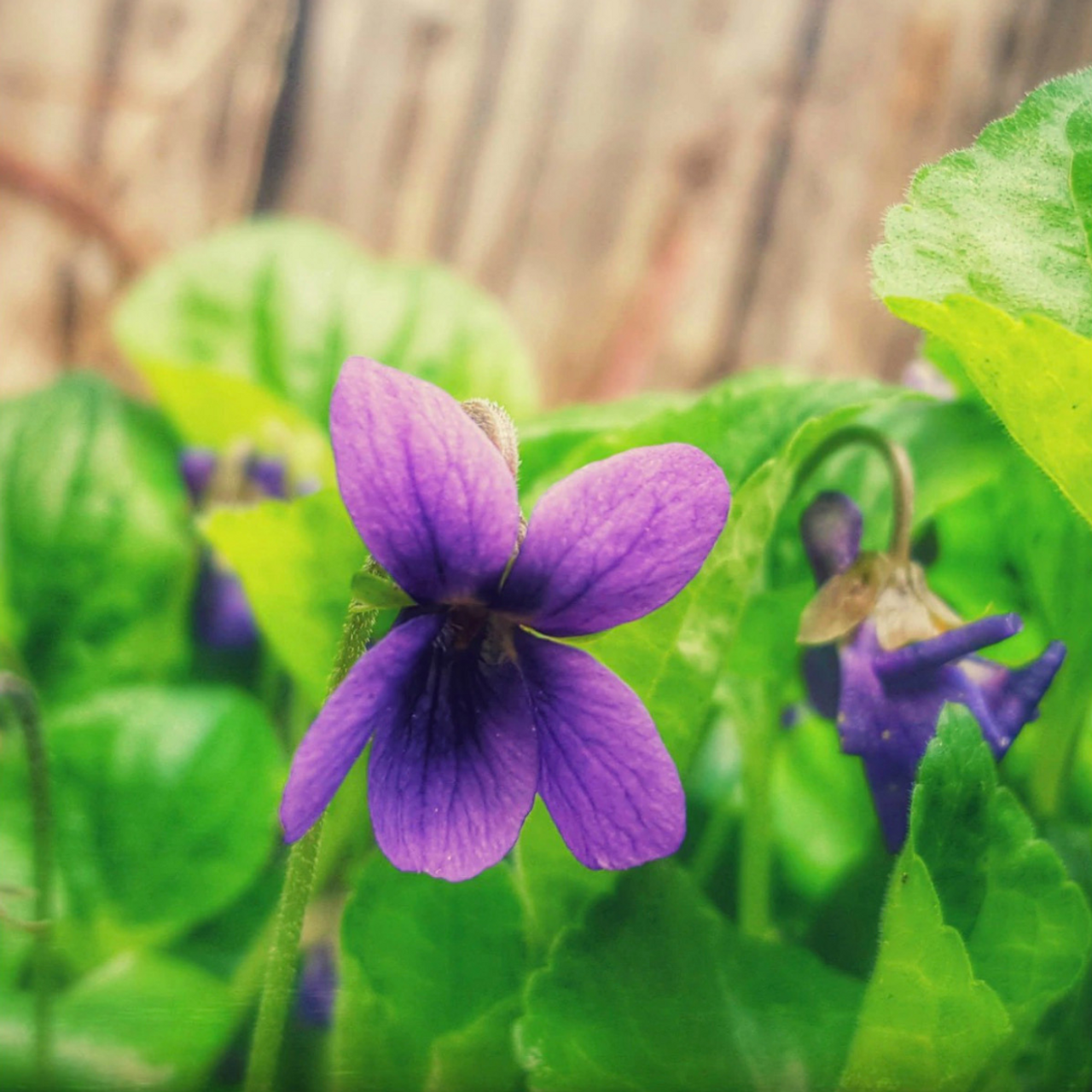
The first is the one you'd recognize: small, purple, nodding downward on a delicate stem. Beautiful. Fragrant. Visible. Those showy purple flowers? Mostly sterile. They produce almost no seed. In botanical terms, they're for display only.
The real productive work of the violet happens underground.
Beneath the canopy of heart-shaped leaves, the violet grows a second set of flowers that never open. Botanists call them cleistogamous, from the Greek for "closed marriage." These hidden flowers pollinate themselves in the dark, produce the vast majority of the plant's seeds, and do all of this without ever being seen by a pollinator, a predator, or a passing eye.
The violet's most productive work happens in private. Its public face is beautiful but functionally hollow.
Sound familiar?
This is what herbalists call the doctrine of signatures. The physical form of the plant mirrors the exact human pattern it addresses. The violet is the original "shrinking violet." Not because it lacks vitality, but because it routes its deepest power through hidden channels.
The heart-shaped leaves form a protective canopy. The flowers nod downward and inward, like someone who has learned to make themselves smaller. The plant hugs shaded ground, sheltered edges, the margins of the garden where attention doesn't reach.
Even its fragrance tells the story. Violet contains a compound called ionone that temporarily numbs your scent receptors. You smell the sweetness, then it vanishes. Lean in again and you get nothing. Walk away, and it returns. A gift that presents itself, then retreats. Appears, then hides.
The violet doesn't lack beauty. It has a pattern of concealing its own.
What's Actually Happening
You developed your sensitivity early. It wasn't a flaw. It was equipment. You could read a room at seven years old. You knew when a conversation had shifted before anyone changed their tone. You processed more per interaction than most people process in a week.
But nobody taught you that the processing was the gift. What you learned instead was that the world rewards the ones who speak up, and if you can't match their assertiveness, the safest move is to do your real work alone and let the visible version of you be a pleasant, agreeable surface.
So you built the canopy. Heart-shaped leaves over hidden flowers. A public self that is warm, likable, and deliberately small. A private self where the actual creative power lives.
Over time the gap between those two selves became the problem.
Not because the private work suffered. The private work is excellent. You know that. This isn't a confidence issue. You trust your own ability. What you don't trust is the world's ability to receive it without damaging something essential about you.
What Violet addresses is the pattern where the gifts are ready, you know they're ready, and the only thing standing between them and the world is a door you built yourself. That's a different architecture.
Growing the Second Flower
Violet flower essence works on what we might call the second flower. Not the hidden one that self-pollinates in the dark. That one is already thriving. The second flower is the visible bloom, the one that opens its petals to the air, invites cross-pollination, and lets its beauty be seen by whoever passes.
Growing the second flower is the process of moving your creative, perceptive, sensitive work from protected private space into shared space. Without losing the root system that made it possible.
The goal is to let the hidden flower open.
The violet plant needs both kinds of flowers. The hidden ones that do the deep private work. And the visible ones that put beauty into the world where it can be cross-pollinated, appreciated, and spread. When only the hidden flowers are working, the plant survives but it doesn't diversify. It stays small. It reproduces only with itself.
When both flower types are working, the violet spreads through an entire garden.
The breath opens first. That chest tightness you've carried into every group setting since you were a teenager starts to soften. You take a full breath in a room full of people and realize you've been breathing at half capacity for years. Not a dramatic shift. Just space where there wasn't any before.
Then the voice comes back. Not louder. Just present. The thought you would have swallowed comes out at the volume it was always meant to have. You say the perceptive thing, and the room shifts.
Then the work starts moving. The drawer opens. The folder gets shared. The draft gets sent. Because you've stopped confusing privacy with hiding.
"Love this so much! Taking the violet flower essence feels like finding my own super power serum. Things that I've been too timid to say or move forward are finding voice and action. What a wonderful experience. Thank you so much. Highly recommend!!"
- Sara
The hidden flower keeps doing its work underground. The second flower just stops pretending it doesn't exist.
There is a difference between a garden wall and a prison wall. Both keep things enclosed. Only one is a choice.
Where Violet Shows Up
Violet is a single essence, and it does its best work on the specific pattern described on this page. But it also plays well with others.
You'll find it in the Chatterbox blend, where it supports clear, confident communication for people who know exactly what they want to say but freeze when the moment arrives. And it's in Waning Crescent, the moon phase essence for visionaries ready to bring hidden insight to the surface.
If you recognize the pattern on this page, the private creative life, the drawer that fills, the difficulty sharing what you know is good, start with Violet on its own. If you're less about the hiding and more about freezing in the moment of speaking, the words right there but unable to land, Chatterbox targets that narrower window. If the timing matters, you're launching something, stepping into a new role, entering a more visible season, Waning Crescent works with that threshold.
What People Are Experiencing
"I chose Violet to help me find my voice in the community and to find peace within and open up my third eye and crown chakras. Since starting the Essences, there was a lot to uncover so the blockages took a while for me to get through, and it's still in the works, but I credit this, as it's helping me dive deep with persistence and clearing all that no longer serves me and claiming what does serve me."
- Lauren
"I love this company's essences. They work as described!"
- Lorraine
Individual experiences vary.
BE Somebody
Violet is the essence I reach for when someone tells me they have all this creative work they've never shown anyone.
The pattern it addresses is invisible. Invisible patterns cost the most over a lifetime. Nobody stages an intervention for the person who keeps their gifts to themselves. There's no crisis. No breakdown. Just a slow, constant accumulation of things unsaid, unshared, and unreleased.
This essence helps close the gap between what people create in private and what they allow the world to see. By making the distance between the hidden flower and the visible one a little shorter. That's what drew me to flower essences in the first place. They don't turn you into someone else. They remove what's standing between you and the version of you that was already there, just beneath the canopy.
Your Second Flower
You have a drawer full of finished work that nobody has seen.
You've had it for a while now.
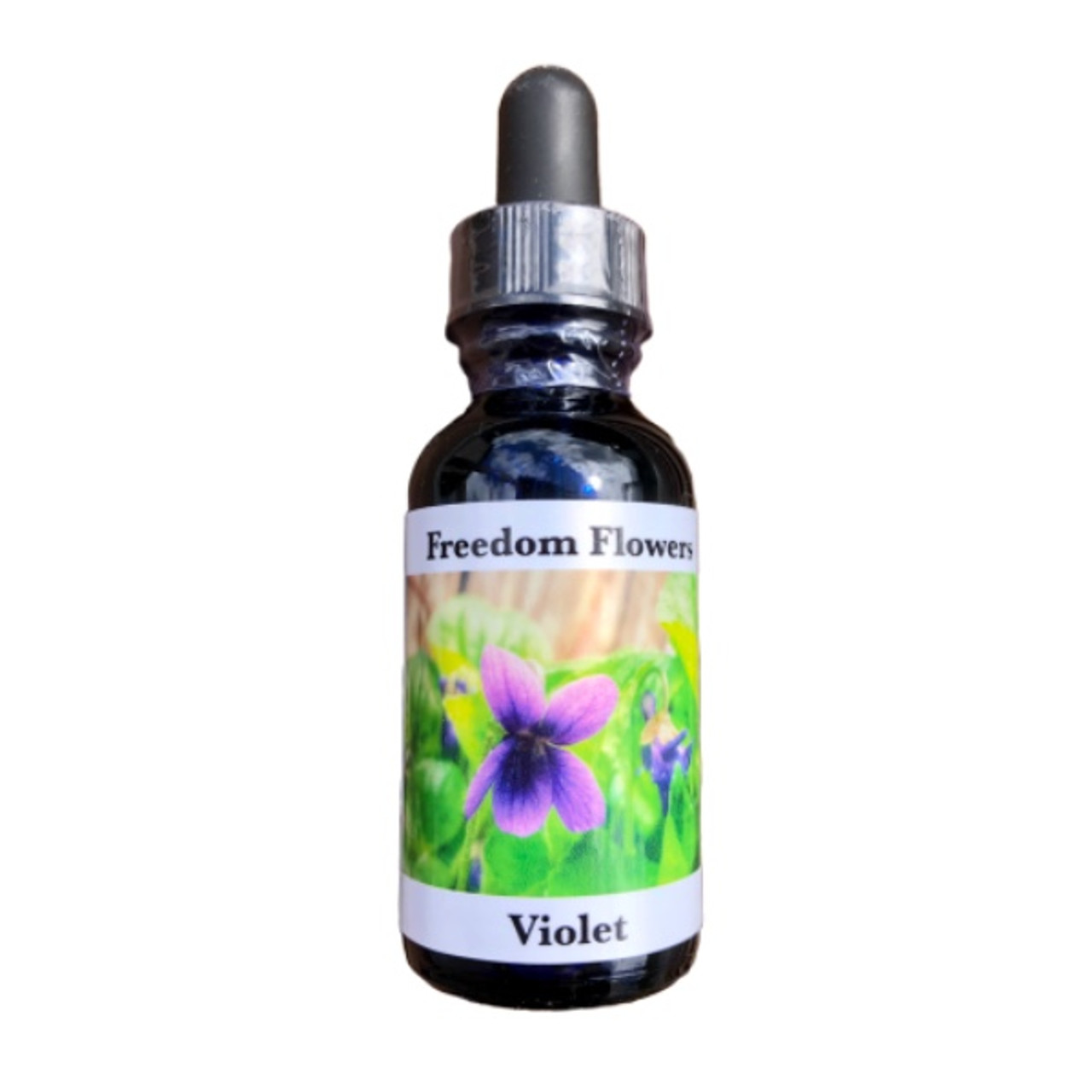
Violet flower essence is a single remedy for this one pattern. The pattern of doing beautiful, perceptive, fertile work in private and keeping the door closed when it's time to share. I make it by hand. One small bottle. Most people notice the breathing shift first, then the voice, then the willingness to let the work move.
The violet doesn't become a different plant when the second flower opens. It becomes the whole plant. Both flowers working. The hidden one still doing its essential work underground. The visible one finally open.
Your second flower is ready. It has been for a while.
This is a 1 oz bottle that should last about a month of daily dosing.
All of our essences are made with brandy as the preservative. You can read more on why we use brandy here.
Disclaimer: This product is not intended to diagnose, treat, cure, or prevent any disease. Statements on this site, including customer reviews, have not been evaluated by the Food and Drug Administration. Individual experiences may vary, and results are not guaranteed. Reviews reflect the opinions of the authors and not necessarily those of Freedom Flowers. Please consult your healthcare provider before beginning any wellness regimen, especially if you are pregnant, nursing, or managing a medical condition.
For Animals
For the shy, sensitive, retiring animal whose gifts stay hidden because it cannot bear the exposure of being seen. The dog that is extraordinary one-on-one but shuts down completely in any public or group setting. The cat that is deeply affectionate in private but vanishes when anyone visits. The horse that performs brilliantly alone but falls apart at shows. Violet strengthens the introvert without trying to make it an extrovert. It helps the animal manage the tension between needing privacy and needing to participate in the world, finding a rhythm of showing up and retreating that works. The animal does not need to become bold. It needs to feel safe enough to let its qualities be seen when the moment calls for it, and protected enough to retreat when it needs to recharge. Ideal for animals with genuine sensitivity and talent that are invisible because fear of exposure keeps them hidden.
From the Freedom Flowers A-Z of flower essences for animals. See the full reference for related essences, pet blends, and situational guidance.