You Are Unreasonably Good at Disappearing
The accumulated weight of other people's comfort has a name. And a two-thousand-year-old plant knows how to loosen it.
You apologized to a doorframe last week.
You bumped it with your hip on the way to the kitchen and the word was out of your mouth before you registered what had happened. "Sorry." To wood. To paint and drywall and a corner that has never once had an opinion about you.
And the thing is, you caught it that time. You actually laughed at yourself for half a second. But then something quieter surfaced. The apology wasn't really to the doorframe. It was just the reflex running on its own. The same reflex that fires at the office when you start a sentence with "Sorry, but I think maybe..." The same one that rewrites your emails three times to make sure nobody could possibly read them as too direct.
You noticed. You've been noticing for a while now. Noticing is not the problem.
The problem is that noticing doesn't stop the reflex from firing.
You are doing this because you are unreasonably good at it. You have spent decades becoming world-class at reading a room, absorbing tension before it reaches anyone else, and rearranging your own preferences so the people around you never have to feel uncomfortable. That is a genuine skill. An expensive one. And it runs so deep now that your own opinions have to fight through forty years of accommodation programming just to reach your mouth.
That programming has a name.
The Lead Coat
The name comes from plumbum, the Latin word for lead. Pliny the Elder wrote it down in the first century, for a rough, dock-leaved plant used against an eye complaint that Roman medicine itself called "lead." He wasn't naming it. He was recording a name people already used.
What interests me isn't whether Pliny's remedy worked. It's the word the Romans reached for. Whatever that eye trouble was, they called it lead. Something heavy settling over your sight. Lead dulls. It clouds judgment and makes your own perceptions feel unreliable. You can function. You just can't see straight. Everything arrives through a film of something heavy you can't name.
People-pleasing works the same way.
Not the occasional niceness of compromising on a restaurant. The structural kind, where years of absorbing other people's disappointment, other people's blame, other people's moods have deposited a thin, invisible coating over your own knowing. We call it The Lead Coat: the accumulated residue of guilt, shame, and obligation that settles over self-trust so gradually you forget it wasn't always there.
And the plant that carries this name is practically a diagram of the pattern.
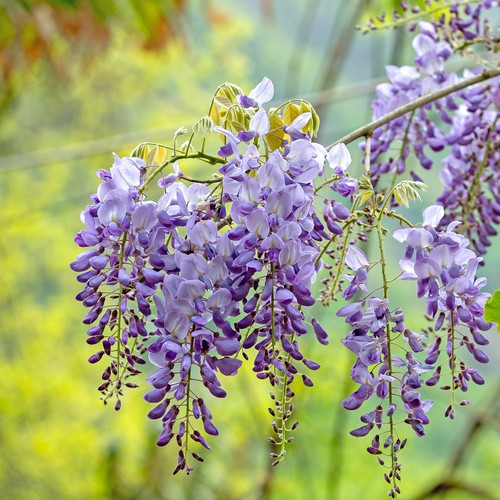
Plumbago is a scrambler. It stands on its own as a full shrub, and given a wall or a fence or a neighbor it leans and hooks its way higher. Its species name, auriculata, means ear-shaped, for the way the leaf bases clasp the stem like small ears. Read that however you like. I read it as a plant that holds on to what it hears.
And the calyx (the cup holding each flower) is covered in sticky glandular hairs that trap whatever touches them. Small insects land and cannot leave. Guilt sticks to you like that. Criticism. That offhand comment from 2003 you can still quote verbatim at two in the morning. (There is always a specific one. It does not take long to surface.)
Plumbago belongs to the same botanical family as Bach's Cerato, the classic remedy for people who know what they think but cannot stop asking everyone else to confirm it. Across traditions, the themes are consistent: this is an essence for people who are apologetic about their very existence.
What Plumbago Does
Plumbago flower essence doesn't make you stop caring what people think. That would be a different plant, and a less interesting person. What it supports is the dissolution of the Lead Coat -- the layer between you and your own clear knowing. People who work with Plumbago tend to describe five subtle shifts:
-
The automatic "sorry" develops a pause. A beat of space opens where your actual thought gets a chance to surface before the accommodation reflex fires.
-
Blame stops sticking. Someone's frustration enters the room without landing on you. Their mood stays theirs.
-
Compliments start to land. Not dramatically. More like they just stop bouncing off. Praise reaches you instead of sliding past.
-
Decisions settle faster. Less polling. Less drafting three versions of a text message. You notice you already know what you want.
-
You don't lose the kindness. You lose the compulsion behind it. The generosity stays. What falls away is the part that was earning permission to exist.
One customer described adding Plumbago to her existing routine and finding it was the missing piece, the thing that finally gave other healing work traction. She called it a "supercharge." We hear variations of that often enough to take it seriously.
The first shifts tend to arrive within a week or two, often noticed only in retrospect: you said something honest in a meeting and only realized afterward that you didn't edit it first. Someone pushed back on your idea and you felt fine. Unremarkably, completely fine.
Freedom Flowers includes Plumbago in the Peak Performance blend, where it works alongside the deeper relational programming that keeps people running everyone else's operating system instead of their own. It also works well on its own. It is persistent.
The Unremarkable Morning
A few weeks out, the ordinary moments look different. Someone asks your opinion. You give it. No scan of the room for reaction. No late-night replay.
Just the plain, almost boring experience of trusting yourself. The way you trust gravity, or the way you trust that the ground will be there when you step.
That is what sits underneath the Lead Coat. It has been there the whole time. Plumbago does not add anything new. It supports the clearing of what was never yours to carry.
People-pleasing is not a crisis. It is a slow leak. The gradual, imperceptible transfer of your own authority to everyone around you, conducted so politely that no one, including you, notices it happening. There is no countdown timer on this page. But today is a reasonable day to stop apologizing to doorframes. And to everything else that never asked you to.
Plumbago Flower Essence: From Obligation to Autonomy
Your instincts are still in there. They have just been waiting for you to stop asking permission to use them.
This is a 1 oz bottle that should last about a month of daily dosing.
We recommend taking no more than one blend at a time. Here's why and some possible work arounds.
All of our essences are made with brandy as the preservative. You can read more on why we use brandy here.
Your order comes with dosing instructions, here's how to use essences if you want to read up before your order arrives.
Disclaimer: This product is not intended to diagnose, treat, cure, or prevent any disease. Statements on this site, including customer reviews, have not been evaluated by the Food and Drug Administration. Individual experiences may vary, and results are not guaranteed. Reviews reflect the opinions of the authors and not necessarily those of Freedom Flowers. Please consult your healthcare provider before beginning any wellness regimen, especially if you are pregnant, nursing, or managing a medical condition.
For Animals
For the animal that people-pleases compulsively. Not because it was trained into submission, but because it operates from a deep well of shame, obligation, or unworthiness. This is the dog that crawls on its belly to appease everyone, the horse that anxiously tries to anticipate what you want before you ask, the animal that accepts blame for everything and seems perpetually apologetic. Where Boxwood addresses externally imposed compliance (trained into a box), Plumbago addresses internally driven compliance (the animal that put itself in the box because it believes it deserves to be there). Plumbago restores autonomy, self-trust, and the sense that the animal's own instincts and preferences are valid. (If the compliance is clearly the result of heavy training methods, see Boxwood. If the animal has lost all drive and seems stuck rather than apologetic, see Horseradish.)
From the Freedom Flowers A-Z of flower essences for animals. See the full reference for related essences, pet blends, and situational guidance.